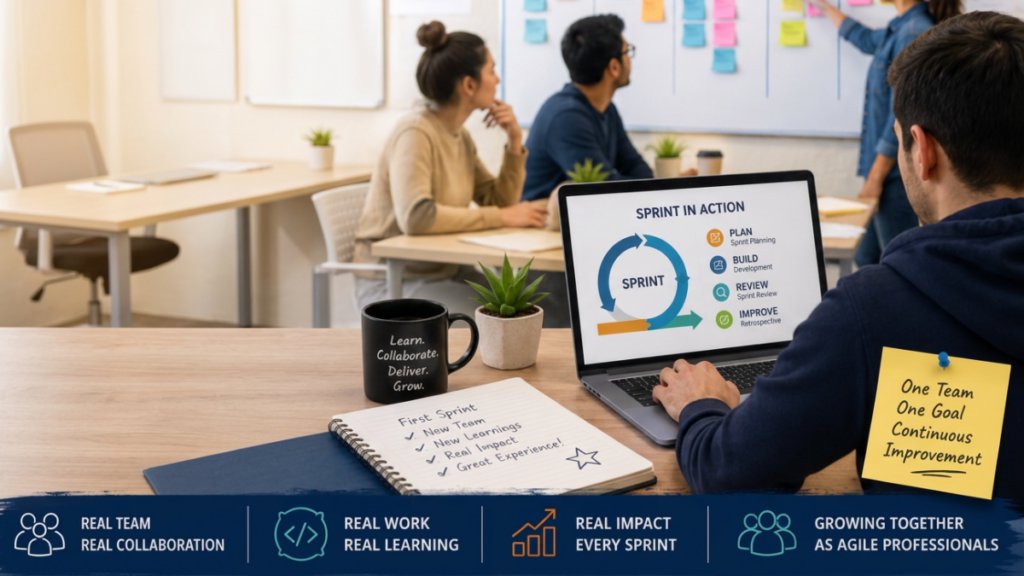
From Learning Agile to Living Agile: My First Sprint with ASVPM
Like all volunteers entering the SVPM Scrum Team Program, I began my journey in the Developer role. This article is being written on my 4th Sprint with ASVPM. While I had learned Agile concepts through training and coursework, participating in an actual sprint with the SVPM Scrum Team was a completely different experience.
My first sprint gave me the opportunity to experience Scrum firsthand—not as a student learning theory, but as a contributor working alongside a Product Owner, Scrum Master, and fellow developers toward a shared sprint goal.
Looking back, the sprint was both exciting and challenging. From learning new tools and refining backlog items to participating in Daily Scrums and completing my first Product Backlog Item (PBI), I gained practical insights into how Agile teams collaborate and deliver value.
Preparing for the First Sprint: The Onboarding Experience
Before joining the sprint, I completed the onboarding process designed to help new volunteers understand the team’s structure, tools, and expectations.
The onboarding experience included:
- Learning the Scrum framework and team workflow
- Reviewing project documentation and team guidelines
- Gaining access to collaboration and communication tools like Slack and Trello
- Meeting team members and understanding individual roles
- Familiarizing myself with sprint ceremonies and Agile best practices
This preparation helped reduce uncertainty and made it easier to contribute during the sprint. Although there was still a learning curve, the onboarding process created a strong foundation for success.
First Impressions Entering the Sprint
As a new developer on the team, I initially wondered whether I would be able to contribute meaningfully right away. However, the team created an environment where questions were encouraged and learning was expected. Instead of feeling like an observer, I quickly felt like a member of the team. That sense of inclusion helped build my confidence throughout the sprint.
Collaborating with Teammates: Agile in Action
One of the most rewarding aspects of my first sprint was collaborating with teammates during backlog refinement, sprint planning, and throughout the sprint itself. As a developer, I had the opportunity to work on a LinkedIn Content PBI that involved creating and refining content using Canva.
While I was already familiar with Canva, working on an actual sprint deliverable helped me explore the tool more deeply and use features that I had not worked with before. It was a different experience compared to using a tool independently because every decision was connected to a specific requirement, acceptance criteria, and the overall sprint goal.
The collaboration within the team played a significant role in this learning process. During refinement discussions, team members shared ideas, provided feedback, and helped clarify expectations. These conversations gave me a better understanding of how to approach the work and how individual contributions fit into the larger objective of delivering value during the sprint.
What stood out to me was how naturally learning happened through teamwork. Whether discussing estimates, reviewing work, or exchanging suggestions, every interaction became an opportunity to improve both the deliverable and my own understanding of Agile collaboration. By the end of the sprint, I had not only completed my PBI but had also gained greater confidence in contributing to planning, refinement, and team discussions.
My Biggest Surprise
Before joining the SVPM Scrum Team Program, I assumed most of my effort during a sprint would be focused on completing assigned tasks. What surprised me most was how much time and value came from collaboration. Sprint Planning, Daily Scrums, Sprint Reviews, and Retrospectives provided consistent opportunities for alignment and improvement. As someone working on Content creation I found the Daily Scrums particularly valuable because they helped me stay connected with the team’s progress, clarify questions, and identify dependencies early. These conversations ensured I always knew where to seek support and how my work contributed to the sprint goal.
Another surprise was how comfortable the team made it for new volunteers to learn. There was no expectation to know everything on day one. Instead, team members actively encouraged questions and treated every discussion as a learning opportunity.
Lessons from My First Sprint
Looking back, my first sprint taught me a few simple but valuable lessons:
- Progress happens through collaboration. Some of my biggest learning moments came from discussions with teammates, not from working independently.
- It’s okay not to have all the answers. Asking questions and seeking clarification helped me learn faster and contribute more effectively.
- Daily communication makes a difference. Regular check-ins helped keep work moving and prevented small challenges from becoming bigger blockers.
- Agile is best learned by doing. Working on a real PBI, participating in ceremonies, and collaborating with the team gave me a much deeper understanding of Scrum than any training or course could.
Advice for New Volunteers Entering Their First Sprint
If you are preparing to join your first sprint, here are a few recommendations:
- Complete onboarding materials thoroughly.
- Participate actively in sprint ceremonies.
- Ask questions whenever something is unclear.
- Be open to feedback and learning opportunities.
- Focus on collaboration rather than perfection.
- Take time to understand how your work supports sprint objectives.
Remember that every experienced Agile practitioner started as a newcomer. Your first sprint is not about knowing everything—it is about learning, contributing, and growing as part of a team.
Final Thoughts
My first sprint with the SVPM Scrum Team Program gave me a practical understanding of Agile that I could not have gained through training alone. Starting as a developer allowed me to experience the day-to-day activities of a Scrum Team, including backlog refinement, sprint planning, Daily Scrums, collaboration with teammates, and completing PBIs within a sprint.Most importantly, the experience showed me that Agile is not just about processes and ceremonies. It is about people working together, supporting one another, and continuously improving.
For anyone considering joining the SVPM Scrum Team Program, my advice is simple: embrace the learning process, ask questions, and actively participate. Your first sprint may feel unfamiliar at first, but it will provide valuable hands-on experience that helps transform Agile knowledge into real-world practice.
Image: Tejaswini Ramaswamy. “Scrum Teamwork” Created using Canva, June 2026

