I walked into the ASVPM capstone project thinking I knew what it meant to manage a project. After all, my experience as a Construction Project Management student had taught me the basics: schedules, risk registers, cost tracking, scope boundaries, and stakeholder communication. I thought I understood planning, but ASVPM—Agile Silicon Valley Project Managers—soon proved that managing a project is much more than executing tasks. It’s about people, decisions, integration, agility, and the ability to lead when the roadmap isn’t fully drawn.
From the very first team meeting, it became clear this project would challenge me in ways no construction site ever had. Our mission was deceptively simple: develop a grant-focused contract framework that ASVPM could use with funders and stakeholders. But soon, the complexity of the task revealed itself. Unlike construction projects where scope can be visualized in drawings, schedules, and bills of materials, this was a conceptual exercise requiring governance design, compliance mapping, and alignment of multiple stakeholders—all within an agile framework. The challenge was exhilarating and intimidating at the same time.
Meet the Dream Team
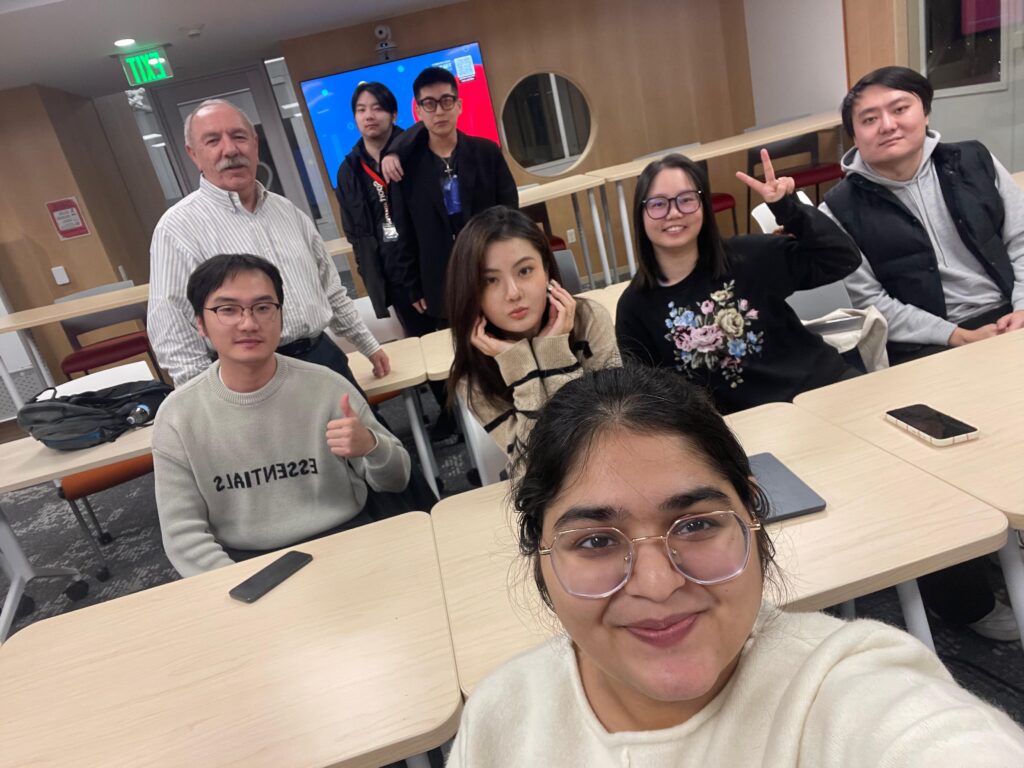
No one conquers complexity alone, and I was fortunate to lead a team that was highly talented and complementary in skillsets. Under the guidance of Professor David Bakhtania, we each brought our own strengths to the table:
- Allin Wu – Contracts & Compliance Lead: Allin was the legal and compliance backbone. She navigated nonprofit regulations with precision, ensuring that every clause in the framework would hold up in the real world. Her attention to detail was both a blessing and a challenge—I often had to help translate her technical legalese into actionable project terms for the rest of the team.
- Xu Su – Research & Analysis Lead: Xu Su transformed mountains of resources, blog insights from SVProjectManagement.com, and grant literature into clear, actionable insights. Her research became the foundation for defining scope boundaries, and her analytical approach helped us avoid scope creep before it even started.
- Mengtian – Documentation & Communication Lead: Mengtian ensured our outputs were polished, professional, and consistent. From formatting Team Charters to keeping precise communication logs, he made sure our work looked as good on paper as it did in execution.
- Peiyu – Scheduling & Tools Lead: Peiyu was the operational genius who turned abstract tasks into a coherent timeline. Using Trello and Jira, he ensured that every milestone was tracked, achievable, and aligned with dependencies. He also kept version control airtight, which was critical when multiple iterations were flying across Google Drive.
- Me (Binal Shah) – Project Manager & Scrum Master: My role was to integrate all these strengths, balance personalities, make critical decisions, and maintain momentum. Some days it felt like juggling flaming swords—coordinating debates, clarifying misunderstandings, and keeping everyone focused on deliverables.
Leadership Without a Blueprint
Managing this team required a new level of adaptive leahttps://www.hks.harvard.edu/publications/practice-adaptive-leadership-tools-and-tactics-changing-your-organization-and-worlddership. I quickly realized that my prior experience in construction—managing trades, schedules, and site inspections—was only partially transferable. Here, I wasn’t just scheduling tasks; I was mediating debates, guiding abstract thinking, and ensuring every team member felt heard while keeping the project on track.
There were moments when discussions would last hours: Allin dissecting compliance language clause by clause, Xu Su presenting research with layers of nuance, Mengtian perfecting every sentence in the deliverables, and Peiyu reminding us that a missed task today could cascade into a delayed milestone. My responsibility was to synthesize all these perspectives, prioritize actions, and make timely decisions without stifling creativity or slowing progress.
I learned quickly that leadership in an agile project is less about authority and more about facilitation. It’s about knowing when to step in and when to step back, when to push for decisions and when to let the team iterate. The delicate balance between control and flexibility became my daily challenge—and my greatest learning opportunity.
Navigating Technical Challenges
The technical complexity of this project tested every ounce of our problem-solving skills:
- Governance Without Drawings: Unlike construction projects where visual plans define scope, we had to design decision-making matrices, escalation protocols, and accountability charts from scratch. Each role had to be clearly defined, and every responsibility mapped to ensure nothing slipped through the cracks.
- Agility Meets Compliance: Aligning agile principles with grant regulations was like walking a tightrope. Flexibility was necessary, but too much flexibility could compromise accountability. I facilitated multiple iterations, cross-review sessions, and feedback loops to ensure that the framework was both adaptable and compliant.
- Tool Overload: We relied on Slack for quick updates, Zoom for governance check-ins, Google Drive for collaborative drafting, and Trello/Jira for task tracking. Keeping everyone on the same version, managing edits, and maintaining a clear workflow demanded strict ownership rules, sprint planning, and proactive coordination.
- Scope Definition and Risk Management: Each scope element needed to be actionable and measurable, while still leaving room for agile iteration. I worked closely with Xu Su and Peiyu to identify dependencies, critical paths, and potential risks—essentially applying construction project thinking to abstract governance work.
These challenges were intense, but navigating them taught me that project management is not about avoiding complexity—it’s about structuring it, leading it, and converting it into results.
Leadership Recognition & Personal Growth
Halfway through the project, I received a message recognizing me as the best team leader. That acknowledgment wasn’t just gratifying—it was confirmation that I was leading beyond tasks, that I was facilitating decisions, managing ambiguity, and motivating a team under pressure.
This project transformed my professional identity. I started as someone who knew schedules and risk registers; I became someone who could integrate multiple perspectives, guide a team through uncertainty, and deliver structured, value-driven outcomes.
Deliverables & Achievements
By the end of the capstone, our team delivered:
- Team Charter: Clear roles, responsibilities, and communication protocols
- Research & Scope Analysis: Insights that defined boundaries and requirements
- Project Schedule: Realistic timelines integrating agile sprints and dependencies
- Inter Organizational Contract Framework: Balanced flexibility with compliance for real-world applicability
More importantly, we achieved all of this as a cohesive team, overcoming debates, late nights, and iterative refinements.
Recommendations for ASVPM
Based on our experience, I would suggest:
- Develop a Global contract governance playbook to accelerate onboarding and planning
- Integrate tool usage and version control rules early to prevent workflow friction
- Continue investing in cross-functional leadership development, because successful agile governance relies on people as much as processes
Mission Accomplished
The final team photograph with Professor David Bakhtania captured more than a project—it captured growth, collaboration, and triumph. What started as a capstone assignment became a personal and professional transformation. I came in as a construction PM student who understood schedules; I left as a Project Manager capable of leading people, processes, and agile projects without a blueprint.
Objectives met. Value delivered. Mission accomplished.