I was mountain biking recently along a lovely canyon path when I rounded a
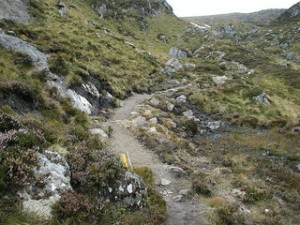
curve and suddenly found myself on a tricky bit of trail. I realized (or so my brain told me) that if I didn’t keep moving I would probably die. But if I put a foot down and stopped moving, I would fall over and certainly die. (The challenge was a narrow, curved, downhill crossing with steep rocky falls on either side.) Losing focus on the trail — i.e. on the goal of of the crossing — and putting a foot down would mean a nasty tumble.
Although I wasn’t thinking much about project management at that moment, when I was packing up later it dawned on me that a common bit of wisdom in mountain biking is directly applicable to project management: Focus on where you want to to go, not on where you don’t want to go. When biking it is very easy for riders to get distracted by hazards they want to avoid — and by doing so head their front wheel right for them and into the rocks.
Similarly, project teams can get so wrapped up in the potential threats and distractions to the ultimate deliverable and value of their project that they run their project right off the critical path and into risk.
You as project manager steer the ride. Although you must be aware of distractions and negotiate hazards you must keep it pointed in the direction that you want it to go. As project manager you are responsible for risk analysis and mitigation but you must not let that activity consume the project.
You will have project stakeholders — project customers and team members alike — who will lose confidence and want to “put a foot down,” but you must manage them, keep them calm and keep them moving forward.
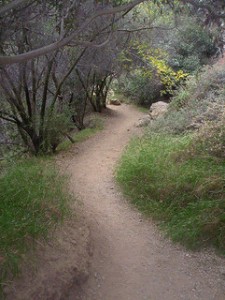
You will have daily distractions and tactical demands, e.g. to maintain project methodology documentation most likely with the weight of an insistent PMO behind them. But experienced project managers know that you cannot simply turn the crank and expect the project to go in the right direction automatically. You have to stay focused, and you have to steer, and you have to help the rest of your team stay on the path forward.


Yes indeed! You want to want to keep an eye on where you’re supposed to be going but you also have to navigate appropriately. (As a mountain biker, I’m not one to bomb downhill through rock gardens!)
While also a mountain biker, skier, road rider, and other full-contact sports found here in Colorado, the advice here needs to be tempered with Tim Lister’s (Emeritus Fellow IBM) – “risk management is how adults manage projects.”
I work in the domain of manned space, nuclear power and nuclear waste clean up, bio-phama, and launch vehicle development. All hazardous domains, along with the “hazards” of over budget and behind schedule, mean millions if not billions of dollars of tax payer money lost.
Risk Management – Cost, Schedule, and Technical Performance is a critical success factor for any competent program manager in these domains and possibly others.
Avoiding the hazards found on a single track can only be done with skill and experience. Same for a 50MPH decent on a road bike. It is critical to know when there are hazards that will actually cause you to crash. Rounding the corner at the bottom of Carter Lake decent at 50MPH and seeing there is gravel in the road would cause our peloton to slow to a crawl.
So care is needed to understand when and where to ignore and proceed and when to stop and walk.