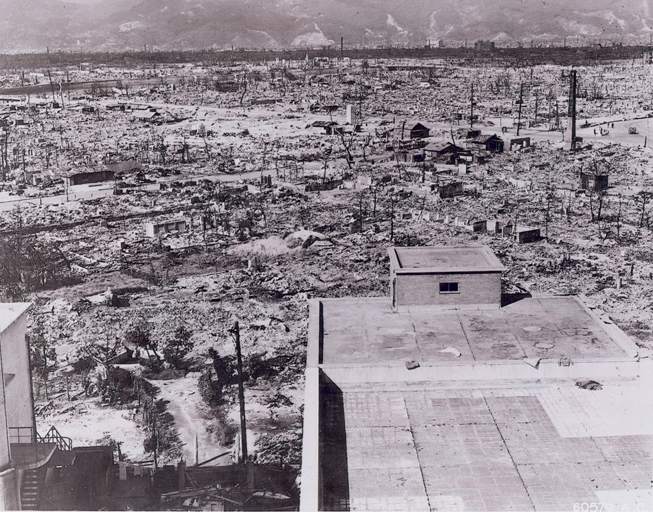
 Yesterday I spent 2 hours walking solemnly through the Peace Memorial and Park in Hiroshima, Japan. This was a somber experience for me. At 8:15 AM on August 6, 1945, in an instant a thriving city was reduced to rubble and throngs of injured people – some screaming for help and others praying for death. I can’t imagine what it must have been like to live through that horror. As I walked the 2 kilometers back to my hotel, my feet aching in my inappropriate shoes, I told myself that my suffering was minor in comparison to the hundreds of thousands of people who had experienced the devastation of the bomb, and I resisted the urge to flag down a taxi.
Sixty years later here I am, a citizen of the USA, working in Japan with wonderful Japanese colleagues on a project that we all believe in passionately. We’re building a business facilitating workshops for leaders in Japanese companies determined to move from a Japanese-centered multi-national status to being a truly global company. Ultimately our ambition is to transform the Japanese economy, currently the #2 economy in the world, through shifting the mindset of these leaders to enable them to be more competitive. Believing heartily that a strong Japanese economy is good for the world, and that Japan has a lot to contribute to solving some of the earth’s most pressing problems (global warming, clean energy) I have thrown myself into this project with unstoppable enthusiasm. Now I work in Japan over 100 days a year, I’m learning the language (slowly!) and enjoying the rice wine and raw, dead fish! It’s hard to imagine that barely 60 years ago we were killing each other.
This experience got me thinking . . . maybe project management can save the world. My Japanese colleagues and I certainly have differences, but we’re a lot more alike than I ever imagined. Our project has the same challenges every faces – assuring that we have shared goals, that plans and schedules enjoy the commitment of the entire team, and there are always improvements to be made when we conduct our lessons learned assessment at the end of each project. Communication is a challenge, not just because of the language barrier – honestly, my Japanese colleagues speak English better than I do, but because of the time zone difference and the hazards of email. People get sick, their kids need to be picked up from school, deliverables slip, mistakes are made. And through it all we’ve become a stronger team and better friends. In spite of everything I assumed about the Japanese culture, I’ve found that they’re pretty much just like most human beings at the core. And I’ve been an overnight guest in their homes, and they in mine.
Most project teams these days cross national boundaries. I can’t think of a single team I’m currently working with that doesn’t have at least one person who’s a native of another country on the team. Even the Japanese leadership teams include people from the US, Europe and South America now. It struck me that project managers have an opportunity to build more than a team, we can build a better world. Perhaps multi-cultural project management is, in some small way, contributing to a borderless world where the devastation of Hiroshima is unthinkable. Personally I like working for a higher purpose than the next product out the door, and I think other people frequently do as well. Next time you’re leading a cross-national team why not build in some time to get to know each other as human beings and do your bit for world peace.
– Kimberly Wiefling, Author, Scrappy Project Management: The 12 Predictable and Avoidable Pitfalls Every Project Faces. Now available on Amazon

